Tuesday, September 14, 2010

Our visit to Dan and family in Washington was great. Lots of rest and family time. We got to Dan's in time to help celebrate Brandon's 13th birthday (hooray!) Brandon's favorite place to eat is Mazatlan, so we went there for a celebratory dinner.
Taught Dan, Alyssa and Brandon how to play Rummikube, LOVE THIS GAME! Our friends Henry and Pearl introduced us to it on a prior camping trip. Rummikube will make your brain hurt trying to figure out your next move. In exchange for whupping the kids at Rummikube they taught me a Wii car racing game. I was pitiful, I kept driving off cliffs, driving the wrong way, etc. Needless to say, after one complete game (3 races) the kids let me off the hook!

After Dan's we spent a couple of days at Cousin Jerry's house in southeastern Washington. Never been to that neck of the woods before and it was a big surprise for us, it's desert! Really beautiful basalt bluffs nestled up against the Columbia River, gorgeous county. Like California, Washington has turned their desert into agricultural land. Cherry's, potato's, spearmint, apples, wine grapes, corn, asparagus, etc are grown here. Had a really nice visit with Jerry and Lucinda.


Back on the road again, we head to Portland for a stopover with Niece Jeanie. It was nice to see Jeanie, Paul and Cal, but it's time to go home. We had planned on driving half way home and stopping at Seven Feathers Casino for the night. Instead, we kept driving and made it home by 9:00 pm. We were pooped, but really glad to be home. 

We traveled 13,271 miles in the truck, hauled the trailer 8,121 miles, spent almost $4,000 on diesel, and had more than $6,000 in truck repairs. Alaska was incredible, we're already talking about going back. Loved the people, the spectacular scenery and of course the amazing animals! I will be posting lots more photos  on Facebook in the next week, so stay tuned.  

So now that we're home, the weeds are taking over, all of my roses need pruning, but everything will have to wait until after Halloween. It took three days to clean the four months worth of dust from inside the house and another two days to unpack the trailer. I also did 11 loads of laundry. I think Maggie is glad to be home, although I am not sure she remembers the house. I am off to see Kimmy, Jeff, and the kids for a few days, then it will be time to start Halloween. Just as Google changes it's Doodles for holidays and other noteworthy occasions, I will be changing our blog's format for Halloween. All the Alaska articles will be still be there, in case anyone needs to catch up on their reading. Thanks for following along!      

Saturday, September 4, 2010

As I said, we are homeward bound. In checking the route to Vancouver I found a road we had not traveled. It's called the Sun to Sea Road and it goes through Whistler, where the Olympics were held. It sounded like  one last adventure so I told Jim we should take it! Beautiful scenery, lots of aqua blue glacial streams, towering Canadian Rockies and fireweed in bloom, just gorgeous. Did I mention there were several 14 and 15% down grades, lots of hairpin turns, one lane bridges, etc etc. Our brakes were SMOKING and BILLOWING, Jim's nerves were shot, my nerves were shot,  it was not a good drive. During all of this Jim discovered our trailer brakes were not working. We got to Whistler really late, the campground where we were going to stay was $57 a night and you had to pay $1.50 extra for a shower. We found a campground south of Whistler that was cheaper so we drove there. Turned out their road was REALLY STEEP and long, but we finally reached it. Had really nice views of  the mountains and valley and the showers were free! Turns out Whistler is NEW NEW NEW, looks like Lake Tahoe, so we didn't stop for a look, just headed to Vancouver.  Fortunately the road from Whistler to Vancouver was great and we made good time. The road skirts Howe Sound for some 20 miles before entering North Vancouver. This is where we came to a complete stop, traffic was backed up as far as we could see. Occasionally we putted along at 10 mph, but mostly we sat in the sweltering heat (80 degrees) wondering what the h... had happened. Traffic finally clears and we quickly reach the border crossing. We sit in line for an hour, get within maybe a dozen cars of the border guards shack and see a sign that says RVS CANNOT BE IN THIS LINE! So now Jim is trying to figure out how to get in the next lane (which is coned off.) And of course, NO ONE is going to let us in, even if Jim drives over the cone things. We finally get over, pull up to the boarder guard and he says "what are you doing in this lane!" We explain there was an electronic sign that told us to, this pisses him off because no one told him about it! He lets us go without an inspection (hooray.)  We are now at Dan's for a few days, then on to see Cousin Jerry Parker and then we'll stop overnight in Portland to see Niece Jean. Hope to be home on Sept.11.
We have arrived in Prince Rupert. The town sits in a sheltered inner harbor protected by a rim of islands along the Inside Passage. Once a thriving port town of 18,000 there are now less than 10,000 people. In the past few years the town has lost its logging, fishing and tourist industries. Many businesses are closed up, lots of homes are for sale. We walked down by the harbor, an area referred to as Cow Bay. In 1908 a load of Swiss dairy cows was shipped to Prince Rupert by barge. It wasn’t until the cows arrived that they realized they had a problem, there was no way to unload the cows. The solution? They tossed the cows overboard into the bay. Thus the name Cow Bay. Good thing PETA wasn’t around then!

We visited the Museum of Northern British Columbia where they had an amazing collection of First Nation artifacts. We walked the town’s sunken garden which is being restored to its former grandeur. So much for Prince Rupert.


We drove around the bay to Port Edward (population 577) to see the North Pacific Cannery museum. In the late 1800's, from the Sacramento River in California to the Yukon River in Alaska, there were almost a thousand salmon canneries. Today, most of these rural canneries are gone, burned down and forgotten. When these canneries operated, workers in Canada were segregated. Whites had individual quarters and did office work or held managers positions.

Indians lived together in communal buildings and fished or mended nets.The Chinese also lived in their own communal building and they fished or did construction on the cannery.


So much for Port Edward, 250 miles out of the way, wasn't worth it. Time to get serious about going home.

Friday, September 3, 2010

One more photo about Alaskans. You might be an Alaskan if you recycle plastic bottles.

Thursday, September 2, 2010

So back to Hyder Alaska. Hyder is nestled at the head of Portland Canal, a 70 mile-long fjord which forms a portion of the US / Canadian border. It is the only community in southern Alaska accessible by road.
In the picture of downtown Hyder you'll see a stone building on the left, that building is in British Columbia!

Hyder is so small (50 people summertime/35 winter) it doesn’t even have its own police. If there’s a serious problem the Mounties (who are two miles away) step in until US police can be flown in from Ketchikan Alaska. Once there was a death in a bar in Hyder and they just roped off the body (that was lying on the floor) and everyone kept on drinking! Five movies have been filmed in Hyder - INSOMNIA, LEAVING NORMAL, ICEMAN, THE THING and BEAR ISLAND. In addition to getting Hyderized, you can see loads of brown bears fishing and the most amazing glacier viewing we saw in 12,000 miles of travel!


To see all those bears all you have to do is drive a few miles to Fish Creek and walk the observation platform. We got to watch a sow and her cub (this year’s cub) fish and play in the creek for a couple of hours.


The cub was SO CUTE attacking dead salmon, pawing his mother and running and splashing.


The cub had a white color around his neck which gave him even more personality.


While the cub played mom was busy catching salmon.


Then a HUGE male grizzly walked out of the trees and right past me (about 3 feet away) and waded into the stream. I wish everyone could have heard the cub’s cry. It was the sound of sheer terror. Because males will kill cubs, the sow and cub beat a hasty retreat.

The male had a chunk missing from one ear and a big bite mark on his back. Eventually the male had his fill of salmon and wandered off. 


The 5th largest glacier in North America is Salmon Glacier. It can be reached by driving 25 miles on a  REALLY NARROW dirt road with sheer drop offs and incredible views of the Salmon River Valley and numerous small glaciers.

The road starts in Hyder, at sea level and follows the Salmon River to its birthplace - the Salmon Glacier, at 4,300 ft. The road also goes by several defunct gold mines.


Finally, you reach the summit and have an amazing view of Salmon Glacier below you.


Stewart, British Columbia is just 2 miles from Hyder Alaska. Originally a booming mine town of 10,000, now all the mines are closed and the town is down to 500 people. A lot of companies are doing exploration in the mountains around Hyder and Stewart and there is hope that someday things will get better.

Stewart has a long boardwalk that extends out into the tidal flats of the Portland Canal. Maggie and I took a walk out to the end of it to look for birds and just enjoy the sunshine. The flats are gorgeous.


The floating docks and boats just off Stewart provide a really pretty picture.


Now we're off to Prince Rupert, won't be long and we'll be home.

Monday, August 30, 2010

I have developed a huge respect for Alaskans. They are hardy, resourceful, hard working and independent. Now that we are out of Alaska I thought I would share some things I've learned about Alaskans:
You might be an Alaskan if:              

You might be an Alaskan if you think tarps are
roofing material.  


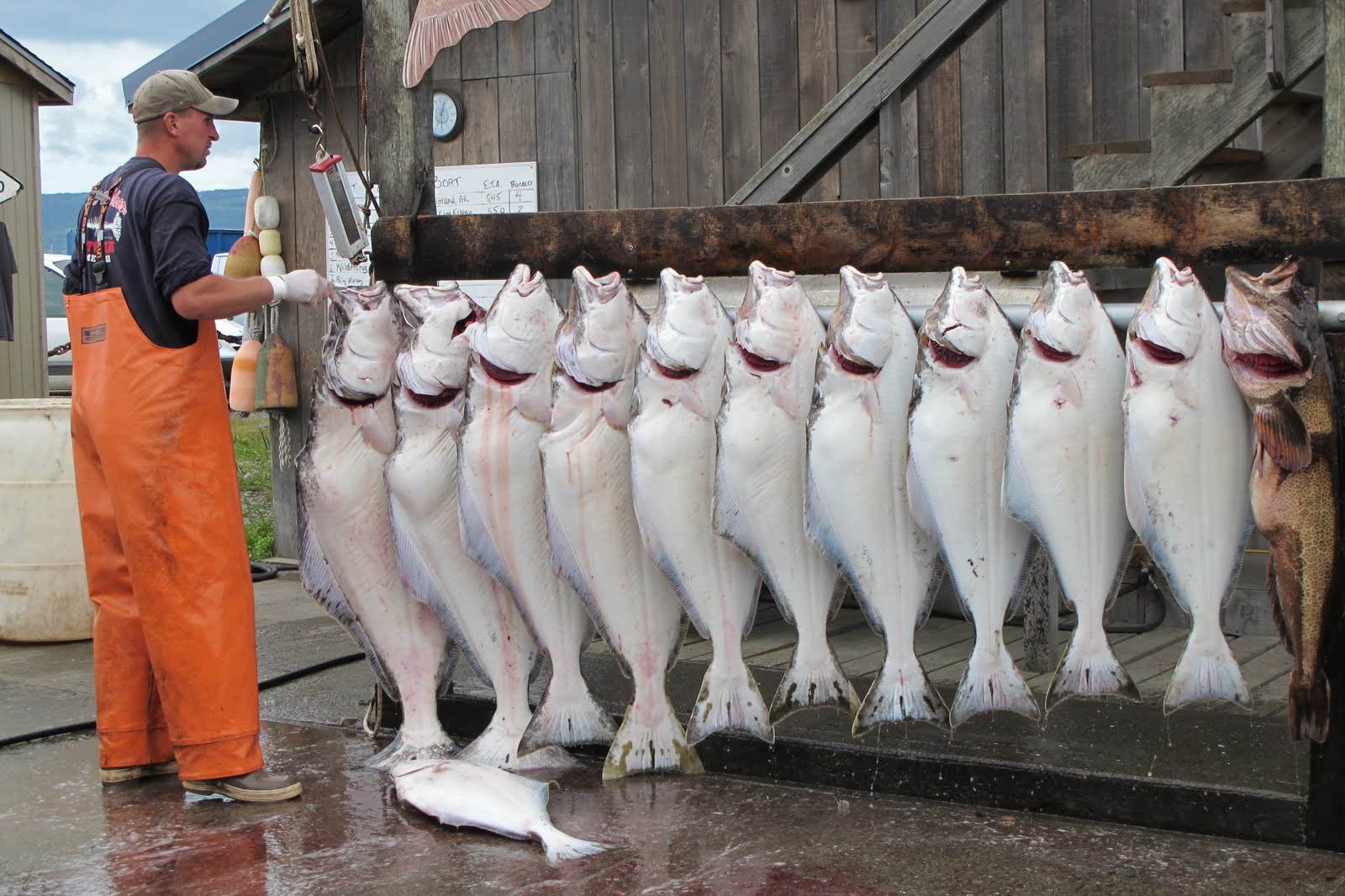
You might be an Alaskan if you went fishing and this is your catch.


You might be an Alaskan if you call these “speed bumps.”


You might be an Alaskan if this is how you get around (and you have skis, floats and wheels for it.)


You might be an Alaskan if you use this to edge your lawn (mooring lines.)


You might be an Alaskan if you're unabashedly patriotic.


You might be an Alaskan if this is what your yard looks like.


You might be an Alaskan if you think this is a motor home.


You might be an Alaskan if this is where you keep your antlers.


You might be an Alaskan if you believe Alaska is a foreign country.


You might be an Alaskan if this is your house boat.


You might be an Alaskan if you think Tyvek is siding.


You might be an Alaskan if this is your neighbor.


You might be an Alaskan if you believe in these words.


You might be an Alaskan if you use one of these to fish for salmon.


You might be an Alaskan if you are PROUD to wave the stars and stripes.

You might be an Alaskan if you have one of these (plug is for engine block and oil pan heater and the electric blanket for the battery.)


You might be an Alaskan if WalMart has these in their parking lot (electric outlets for your engine block heater, your oil pan heater and the electric blanket wrapped around the your battery.)


You might be an Alaskan if you need a BULL BUMPER.


You might be an Alaskan if this is your house.......


And this is your boat.


You might be an Alaskan if you call this a mobile home.


You might be an Alaskan if you can legally ride this in town.
From Skagway we drove to Dease Lake. The next day we drove to the town of Telegraph Creek. 70 miles one way on a dirt road to see what John Muir called “the northern Yosemite.”


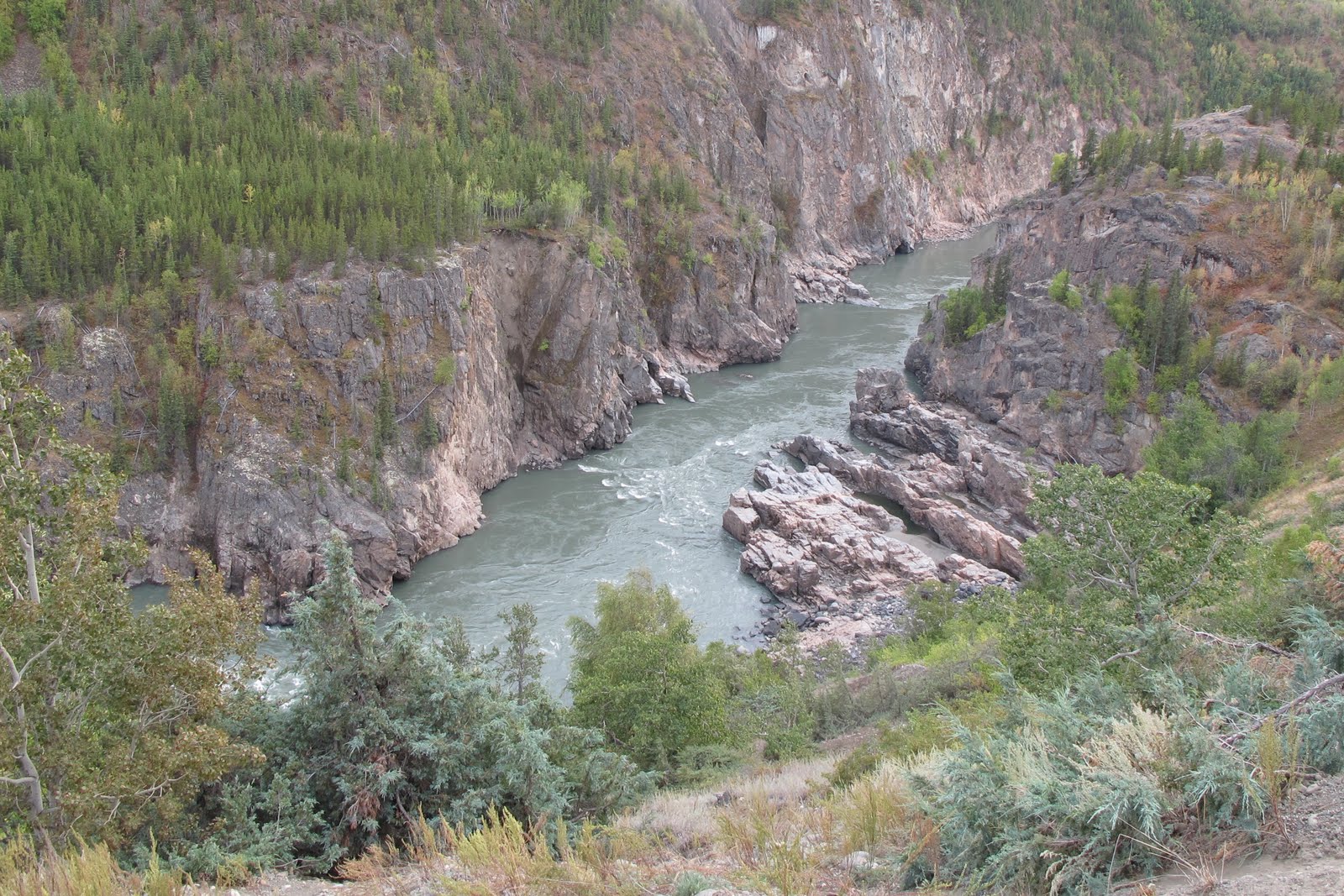
Locally it’s called the Grand Canyon of Canada. Carved by the Stikine River, basalt cliffs rise a thousand feet above the fastest navigable river in North America.


The canyon is really beautiful, especially this time of year with all the trees turning color.


Settled by the Tahltan First Nation, the word Stikine means the Great River. To this day, Tahltan fish camps line the river. Every summer families return to fish, put up salmon, tell stories and reconnect with family. Each camp has specially constructed sheds for air drying salmon. Most of the year the camps are empty, the Tahltans have moved away to the cities to find work.

Loved this little house at fish camp. Spruce logs and old saws painted a happy blue and moose racks on the roof, what a fun place!


Here's the salmon drying shed. Small spruce logs are nailed to the frame with gaps in between to allow air to flow.


At the end of the road is the town of Telegraph Creek. 350 people live in this tiny turn of the century town. Tourism is the towns only industry, B&B’s, jet boat rides, kayak & canoe trips and fishing pay the bills here. 


We were having lunch at the only cafe in town when in walked two Canadian Mounties. The Mounties said Telegraph Creek is a REALLY QUIET duty posting. 


At least half the buildings are abandoned. It's a shame so much of the towns history is is rotting away. This house had beautiful retaining walls in the back. The Mountain Ash tree in the front makes such a pretty picture. 


OK, so much for the canyon and town. Let’s talk about the road. Did I mention it was steep, really narrow, steep, tortuous, steep, lots of drop offs, steep. Here are my favorite signs from the drive.


For all you metrically challenged Americans 20 km/h is 12.4 mph.

 Here's one of the many 180 degree switch backs. It was tight turning for our big truck.


Did I mention all the whoop dee doos?


This is what a 20% grade looks like from behind the wheel.


We also saw a Black Bear sow and cub on the road. So cute!